HERALDIC DISPLAY

Gonfalon Banners

Design, Techniques and Hints

Lady Sabine du Bourbonnais


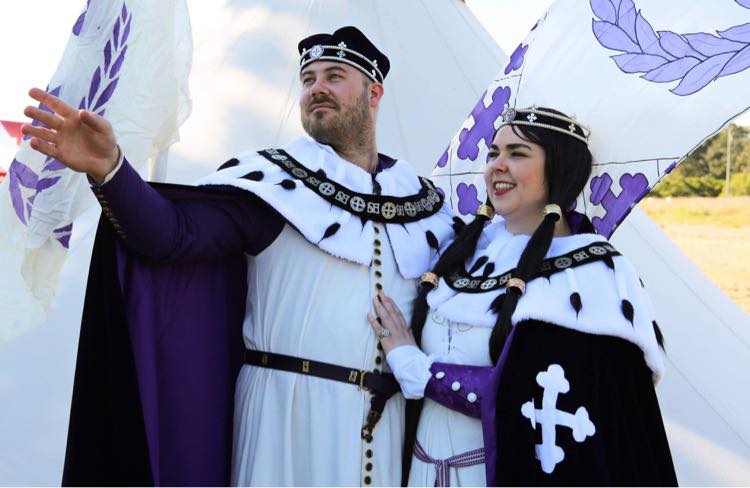
These gonfalons have been made especially to add to the heraldic display of our feasting pavilion when camping.  Gonfalon is the generic term used for most any square/rectangular shaped banner.  Depictions of gonfalons appear across nearly all cultures and time periods.  Often seen in paintings and illuminations of battle fields and campsites, they are more often than not a direct representation of the arms of the owner.  This makes them perfect for marking where you are! 


In light of the fact that they are usually a depiction of exact arms, I would think carefully about making a gonfalon of an unregistered device.  The last thing you would want is to effectively make a banner that looks like it belongs to someone else, and you wouldn’t want to put in all that effort only to have to start again!  Speak to your local group herald about registering your device (Crux plug!).


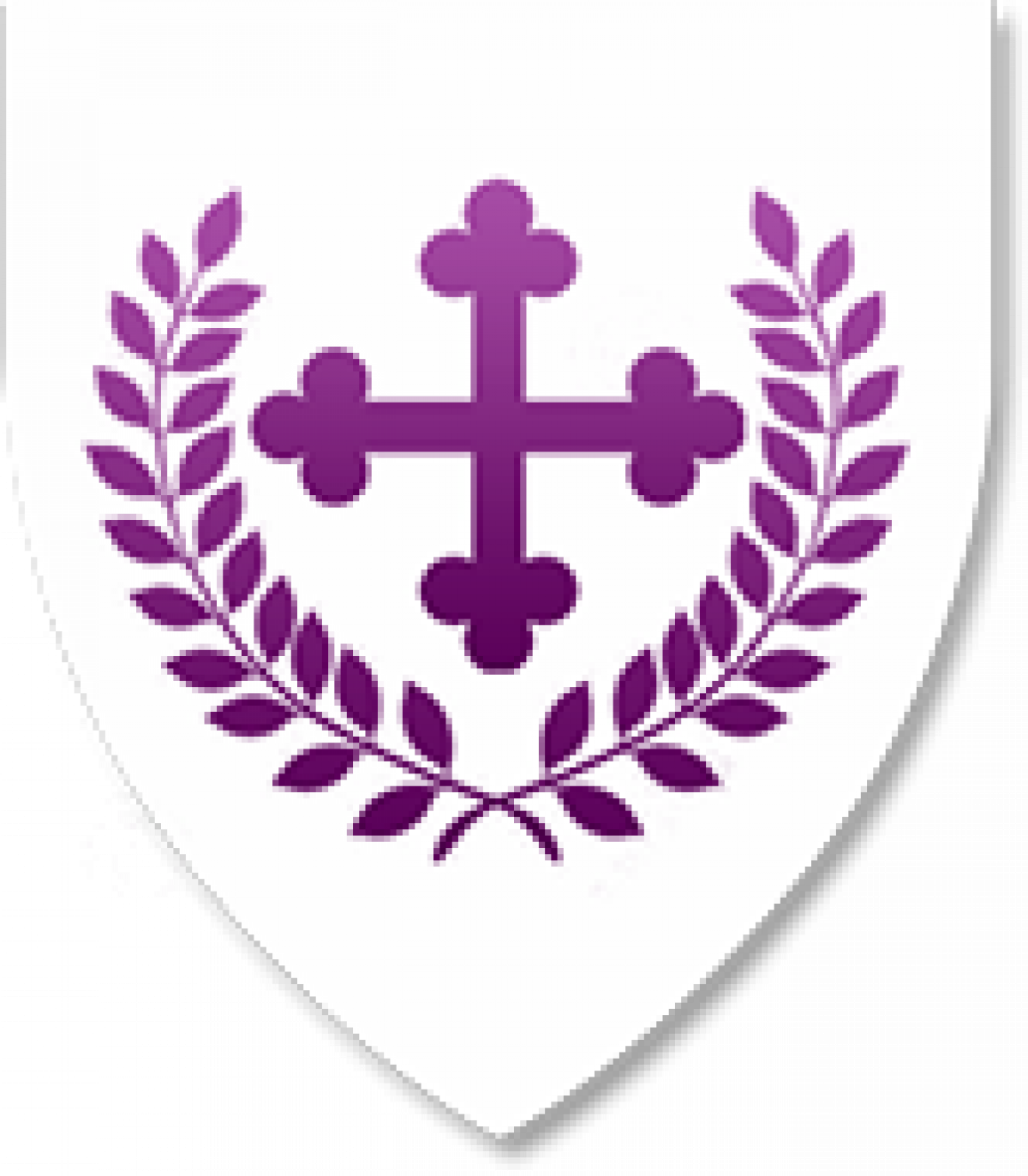
On the left is a copy of my personal registered heraldry, and on the right is the gonfalon I use in our feasting pavilion.


GONFALON DESIGN


When designing your gonfalon, look around at period example.  To achieve a more period or ‘authentic’ look,  research the way your charges looked in period.  The portcullis below is a replica of the style of portcullis used by the Beauforts and later the Tudor dynasty.


Size and shape – Your gonfalon can be any size you choose, and this will most likely be determined by its primary use.  The Louvain gonfalons around our feasting pavilion are a predetermined 105cm in length and approx 85 cm in width (not including the tab tops).  We have used this size, as this allows us to have a cohesive plan to our display, giving a united look with greater visual impact. 


Please note – the Kingdom of Lochac has no sumptuary laws, this means that you can make your gonfalons any size you like – though it is probably considered poor form to make your personal banners larger than the King or Queens! 


Colour – applying the normal rules of heraldic contrast will ensure the colours on your gonfalons are easily distinguishable and visually striking even at distance.  No metals on metals, no colours on colours.


Texture – when working with fabric, you have the options of mixing textures, velvet/damasks/brocades/braid/fringing/beading/embroidery.  The options are limitless.  The studs on the portcullis below are beaded on, while the chains are braid.


Diapering - this technique is used to overcome what is often called ‘le horror vacui’ which is basically an abhorrence of empty space in the design.  If you are planning on using diapering, you will need to research an appropriate pattern for your time frame and culture.  For an example –the diapering on this has been added by couching gold thread.  To create this effect easily, use damask or brocade backgrounds.


La Parentiara Family Banner


TECHNIQUE


Fabric/Embroidered Banners

Extant examples of embroidered and lavishly appliquéd fabric banners are not uncommon.  See your local embroiders and troll through their books for some ideas!


Ground Fabric - heraldic design is based on layers and so are our gonfalons.  First you have a field colour (your background) - choose a fabric you think will suit your design.  Then you have your ordinaries and charges lying on the field.  Everything you add to your gonfalon from here will be applied TO the field, layer upon layer upon layer!


Field Divisions – It is possible to make your field divisions (per pale, per fess, per chevron etc) stand out by using some braid or cord couched or sewn down over the joins in your field.


Charges – You can apply charges either by traditional hand appliqué techniques or use your sewing machine.  Choosing a different textured fabric for your charges from your ground fabric makes them stand out more.


Detail – Pick out the detail on your work using what ever you have to hand.  Leftover bits of braid, couching thread, beads etc.  Eyes are a bit tricky, and may need to be hand embroidered or painting to get them to stand out or to look right.


Backing   Use a heavier cotton drill for the backing.  Choosing a darker colour like black or navy that will stop light coming through your materials will give you banner a more solid look. 


Tabs - The tabs are made like regular tab tops for curtains.  Cut long strips about 18cm wide, back them with the same fabric you are using for your backing.  Cut these to desired length, (about 22cm long) and then fold them in half and sew them into place along the top line of your gonfalon.


Construction – try and sew your banner totally shut, so that none of the working seams, etc are visible when you are finished.  This involves laying it out face up and then pinning your background fabric to the front.  Sew all the way around the edges and then turn it all inside out leaving some hand sewing to close the hole at the top.  Don’t forget to snip your corners if they aren’t sitting flat enough.


Hints


-                     If you plan a velveteen field, try to use damask or brocade fabrics you’re your charges, and vice versa.  This gives maximum contrast between the layers, and employs more texture giving a more luxurious finish.

-                     Photocopy or enlarge your charges to the desire size, remember that charges should use about 75-80% of the available field space.  Keep these templates and use them for your standards!

-                     Refuse to make banners for anyone with ermines on their device!

-                     Use fringe/tassel that is the same as your charges or the second most dominant colour in your design.  Using fringe/tassel the same colour as your field will not stand out from a distance.


Materials


Fabric

-     Ground fabric for the field, have a piece the desired finished size with generous seams – and left overs for tab tops.

-     Contrasting fabric pieces or scraps from your favourite dresses for the charges etc.

-     Backing fabric, something that will hold its shape and not sag – heavier drill cotton is good.


Adhesives

-     Visofix is your friend!  Visofix is fusible webbing that can be ironed onto fabric.  Buy it by the metre, and expect to use as much as the size of your gonfalon and then some!

-         Use spray adhesive available from craft stores for larger ordinaries like chiefs or fesses etc.  It is cheaper than Visofix for large sections.


Binding

-         Bias binding can be quite suitable, or use fancy fringing and tassel for a richer look.


Miscellaneous

-         Try using machine embroidery thread for your appliqué, the colour ranges are excellent, and they are not as dull as normal cotton.

-         1m steel ruler, protractor, compass, dividers etc

-         A photocopy of your device on overhead transparency or cardboard templates

-         Chocolate and coffee.  This isn’t an overnight project, and you may need the sustenance!


Lady Sabine du Bourbonnais


Publishing/Conversion to HTML for the St. Florian De La Riviere Website performed by David Bussenschutt -13th October 2004, with Permission.

Original Source Document is available here in Microsoft Word Format